Guide · Radiator compatibility
Heat Pump Radiators UK: Do You Need to Upgrade Yours?
Most UK homes can keep most existing radiators when switching to a heat pump — if they're sized correctly. Here's how to check yours, when to upgrade, and what it costs.
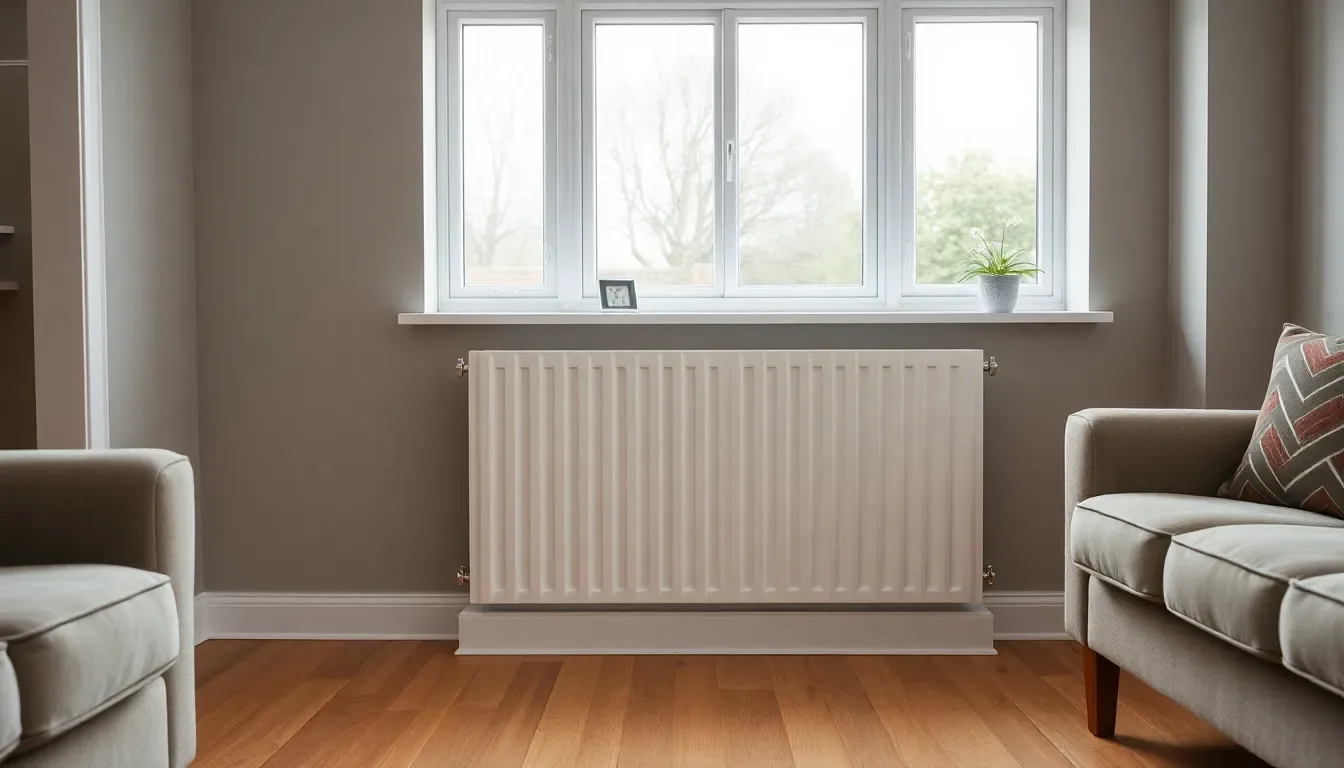
If you've read anywhere that "heat pumps need all-new radiators", that's marketing — not maths. Most UK homes can keep most of their existing radiators when switching to a heat pump. What changes is how the system runs, not necessarily the metal on your walls.
The confusion is real, though, and understandable. Heat pumps and gas boilers heat your home in fundamentally different ways. To make the right decision about radiators — and avoid paying for a fleet of replacements you don't need — you need to understand one number: flow temperature.
The single most important number: flow temperature
A gas boiler typically pushes water out at 70–80°C. A heat pump pushes water out at 35–45°C in normal operation, occasionally rising to 50–55°C in the coldest weather. The cooler water doesn't make your home colder — it just means each radiator needs more surface area to deliver the same heat into the room.
The maths is roughly linear. Halve the flow temperature differential (radiator water vs room air), and you halve the heat output for a given radiator. Double the radiator size, and you double the output. So in principle, you can run any radiator at any flow temperature — you just adjust the size.
Rule of thumb
To run a typical gas-boiler-sized radiator on a heat pump at 45°C, you need roughly 2× the surface area. That can mean a deeper radiator (single → double panel), a longer one, or a taller one — installer's choice based on your wall space.
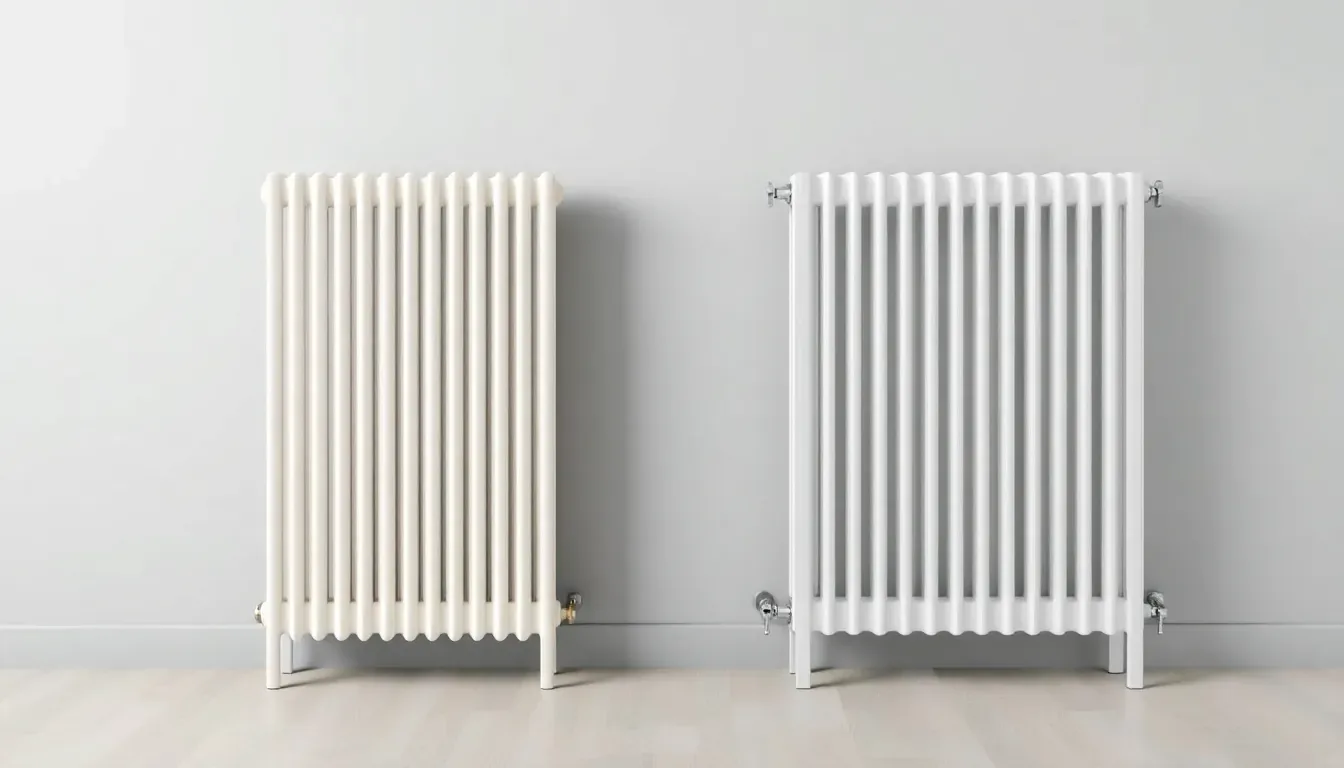
How to check your existing radiators
There are three things to check on each radiator:
- Type — single panel (P+), double panel (K2), or double panel + convector (K3). Stamped on the back, or written on the manufacturer's spec sheet. Heat pump radiators are almost always K2 or K3.
- Dimensions — height × width. Modern double radiators in 600×1400mm or 600×1800mm sizes cover most UK rooms.
- Pipework size — 10mm (microbore), 15mm, 22mm, or 28mm. Look at the flow and return below the radiator. Microbore is a red flag for heat pump retrofits.
A competent MCS installer will measure every room, calculate heat loss, and tell you exactly which radiators need upgrading and why. Be cautious of installers who quote a flat percentage ("all radiators need upgrading") — that's a sign they haven't done the survey properly.
When you'll need to upgrade radiators
You'll typically need new or larger radiators in these scenarios:
- Single-panel radiators in well-used rooms — most living rooms need at least a double panel.
- Rooms with poor insulation — older solid-wall properties may need significantly larger radiators (or insulation upgrades) to make heat pump retrofit work.
- Designer radiators undersized for their room — towel rails and column radiators often look good but deliver less heat than equivalent panel radiators.
- Microbore (10mm) pipework — even oversized radiators may not get enough water flow. Pipework upgrades are sometimes essential.
Realistic upgrade costs
For a typical 3-bed semi, expect to upgrade 2–4 radiators on a heat pump install. Costs:
| Radiator | Materials | Labour | Total each |
|---|---|---|---|
| Standard K2 double-panel, 600×1400mm | £90–£160 | £100–£180 | £190–£340 |
| Larger K3 triple-panel, 600×1800mm | £150–£260 | £120–£200 | £270–£460 |
| Premium designer / column radiator | £300–£800+ | £140–£220 | £440–£1,020+ |
| 10mm → 22mm pipe upgrade per radiator | £40–£90 | £180–£350 | £220–£440 |
For a typical 3-bed semi needing 3 radiator upgrades and 1 pipework upgrade, budget £900–£1,800 on top of the headline heat pump install cost. Worth modelling in your cost calculator view.
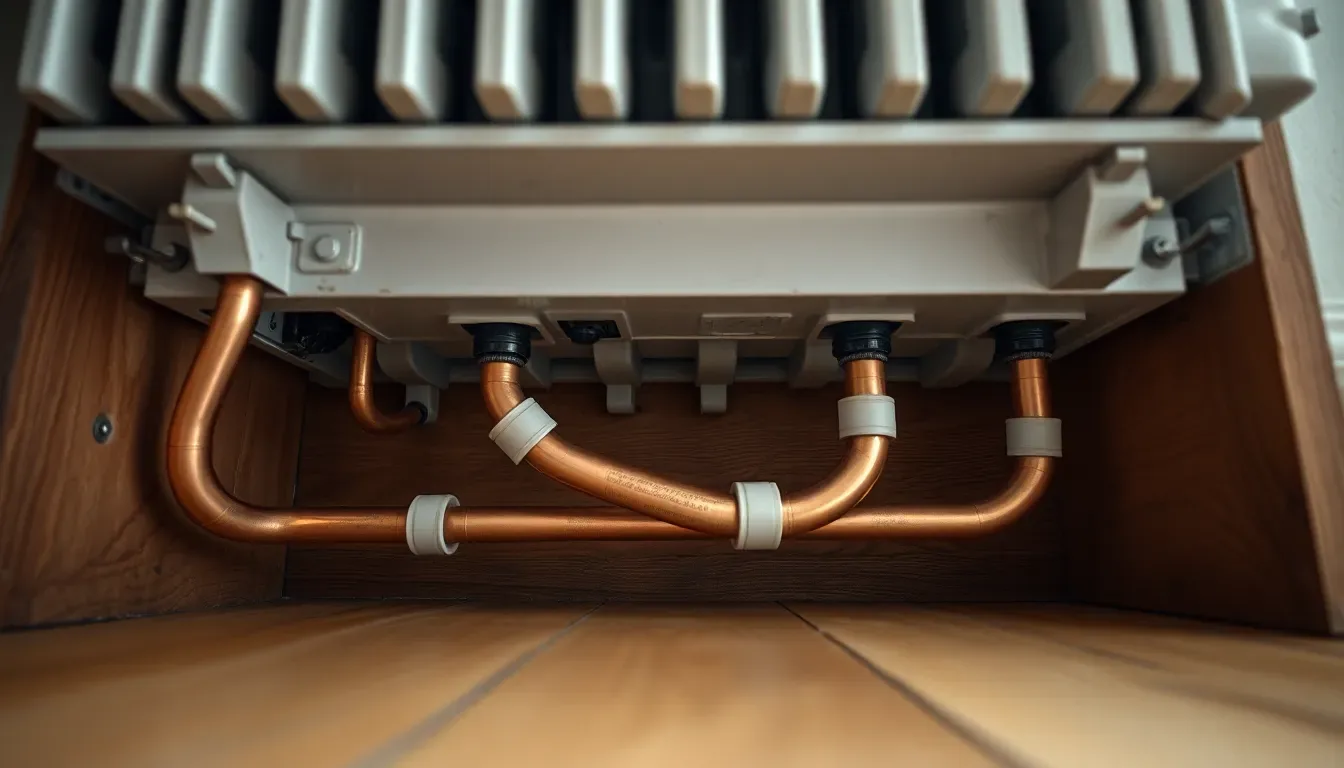
What about microbore pipework?
Microbore (10mm copper) was widely installed in the UK in the 1970s and 1980s. It works fine for gas boilers but is borderline for heat pumps — the higher flow rates can cause velocity noise, pressure drops, and undersupply to far-end radiators.
Options:
- Replace key runs to 22mm — typical approach, costs £300–£600 per radiator depending on access.
- Install a low-loss header / buffer tank — the heat pump runs its own loop at higher flow; microbore stays on a secondary circuit. Adds £400–£800 to the install.
- Accept the limitation — only viable for very small homes or zoned systems.
The "lukewarm radiator" feeling
Heat pumps run their radiators continuously at a lower temperature, rather than blasting them hot for 30 minutes a day. The radiator feels lukewarm to the touch — but it's been on for hours, delivering steady heat into the room. The room temperature is the same; only the behaviour of the radiators is different.
This is the most common cause of "heat pumps don't work" complaints from people who've just moved into a heat-pumped home. They expect a hot-when-touched radiator. They get lukewarm. The room is warm — but they don't trust it. Understanding this upfront helps a great deal.
Underfloor heating: a brief note
Underfloor heating runs at even lower flow temperatures (30–40°C) than radiators, which suits heat pumps very well. SCOP figures on underfloor systems are typically 15–25% higher than on radiator systems.
But retrofitting underfloor heating into an existing finished house is a major, costly job — the price depends heavily on floor area, construction type, and how much floor needs lifting, so get a firm quote from your installer before committing. It typically doesn't pay back its premium versus modestly-sized radiators. We recommend underfloor only when:
- You're already lifting floors for renovation work
- You're building an extension and can integrate at construction
- You particularly want the comfort character (no visible radiators)
Common installer mistakes to watch for
- "You'll need all new radiators" — usually a sign of no proper heat loss survey.
- Quotes without a written heat loss calculation — ask for it. MCS installers should provide one as standard.
- Microbore pipework left in place without justification — at least one run should be upgraded; if not, ask why.
- Designer radiators specified without checking output — column radiators especially deliver less heat than panel equivalents.
The bottom line
Most UK homes keep most of their existing radiators when fitting a heat pump. Budget for 2–4 upgrades in a typical 3-bed semi, plus possible pipework changes if you have microbore. Total radiator-related cost: £500–£2,000 on top of the headline heat pump install.
Don't accept a quote that doesn't include a room-by-room heat loss calculation. Don't accept a quote that says "all new radiators" without showing the maths. The £7,500 BUS grant means most homeowners only pay £3,000–£7,000 out of pocket for the whole system — including any radiator upgrades. Done properly, the home is warmer, quieter, and cheaper to run.
This matters especially in cities with a lot of solid-wall and Victorian housing stock — see our Manchester installation guide for how this plays out in that city's Victorian terraces and 1930s semis specifically, alongside our directory of MCS-certified installers there.