Guide · Education
How Does a Heat Pump Work? UK Plain-English Guide with Diagrams
A clear, technical-but-not-baffling explanation of how heat pumps work in UK homes. The refrigerant cycle, COP and SCOP, cold-weather operation, and what to ask installers.
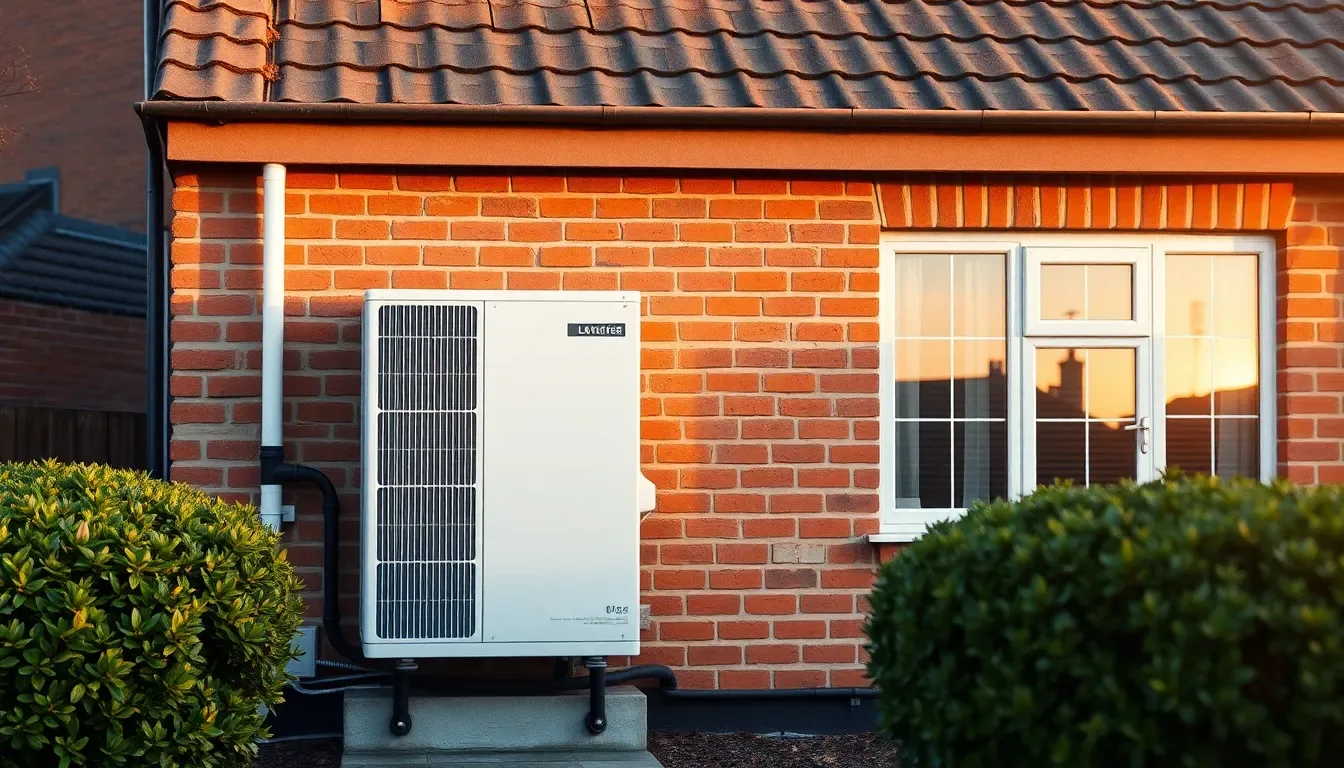
A heat pump is the most common-but-misunderstood piece of UK heating engineering. Most explainers either dumb it down to nothing ("magic from the air") or wade into thermodynamics nobody asked for. This is a middle path: enough physics to actually understand what your installer is doing, no PhD required.
The one-sentence summary
A heat pump moves heat from outside your home to inside, using a refrigerant that boils and condenses at low temperatures. It doesn't generate heat — it concentrates heat that's already there.
The same principle runs your fridge, your air conditioner, and the back of your laptop. The cleverness is in the refrigerant: a fluid that boils at -30°C or so, which means it can pull energy out of cold air.
The refrigerant cycle, step by step
Heat pumps have four core components, arranged in a closed loop:
Cold liquid refrigerant absorbs warmth from outdoor air. Boils into a gas at low pressure.
Squeezes the gas refrigerant. Pressure rises sharply. Temperature rises with it — to 60–80°C.
Hot refrigerant gives heat to your water loop. As it loses heat, it condenses back to liquid.
Liquid pressure drops sharply. Temperature crashes back down. Ready to absorb heat outside again.
The cycle repeats continuously while the heat pump is running. The compressor is the only component that uses electricity — about 1 kWh of electricity drives about 3 kWh of useful heat movement.
Why this is more than 100% "efficient"
The compressor uses 1 kWh of electricity. It moves about 2 kWh of heat from outside. You get 3 kWh of heat into your home — the original 2 kWh from outside, plus the 1 kWh of waste heat from the compressor. That's a COP of 3.0, or 300% efficiency.
This isn't a violation of the laws of physics — the heat pump doesn't create energy, it moves it. The 2 kWh "extra" was always there in the outside air; the heat pump just relocates it.
COP, SCOP, and what installers should quote
There are two efficiency figures you'll see when comparing heat pumps:
- COP (Coefficient of Performance) — measured under standard lab conditions (usually +7°C outside). It's the headline number on marketing materials, often 4.0–5.0 for modern units. It's accurate, but only for that one temperature.
- SCOP (Seasonal Coefficient of Performance) — measured across a full year of UK weather, including cold spells. Typically 2.8–3.5 for well-installed air source heat pumps; 3.5–4.5 for ground source.
SCOP is the figure you should ask about. It's the one that determines your actual annual running costs. A heat pump with a SCOP of 3.2 uses 30% less electricity per year than one with a SCOP of 2.5 — meaningful money.
How heat pumps work in UK cold weather
The most persistent myth about heat pumps is that they fail in cold weather. They don't — they just get less efficient.
Three things happen as outside temperature drops:
- The refrigerant cycle has to work harder. The compressor pulls harder to extract heat from colder air. Electricity usage rises.
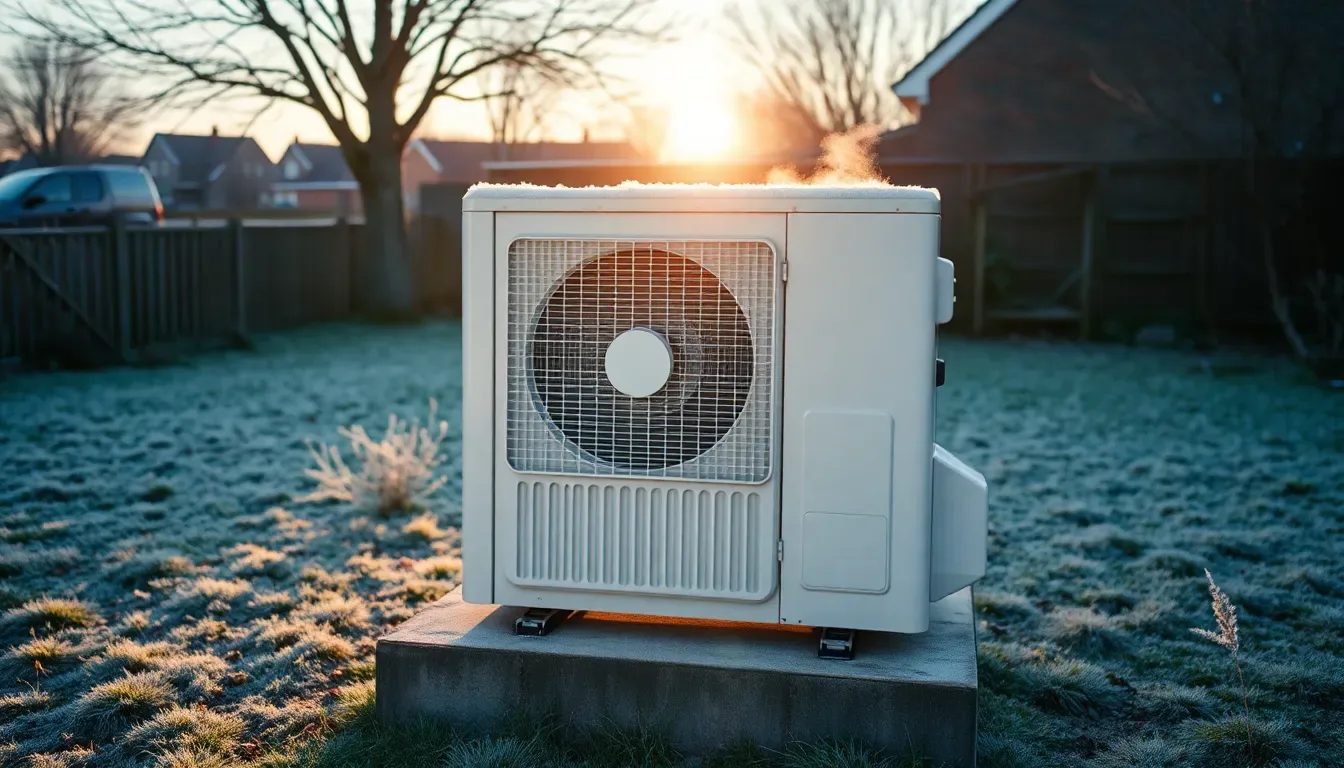
- Defrost cycles kick in. Frost can form on the outdoor coil; the heat pump briefly reverses to melt it. Brief efficiency loss during defrost.
- Backup heating (immersion heater in the cylinder) may engage during extreme cold to top up hot water. This is normal — it's a tiny fraction of annual energy use, not a failure.
A heat pump that delivers SCOP 3.2 across a whole UK year still works at -10°C — just with COP closer to 2.0. That's still 200% efficient, and still cheaper than direct electric or LPG heating.
How heat pumps cool a home (summer use)
Most modern air source heat pumps include a reversing valve. Flip it, and the refrigerant flows the other way around the circuit: the outdoor unit becomes the heat rejection point, the indoor unit becomes the heat absorption point. Suddenly you have an air conditioner.
UK heat pumps are usually configured to deliver cooling through fan-coil units rather than radiators (radiators can sweat with cold water). Worth specifying at install if summer cooling matters to you.
What the outdoor unit actually does
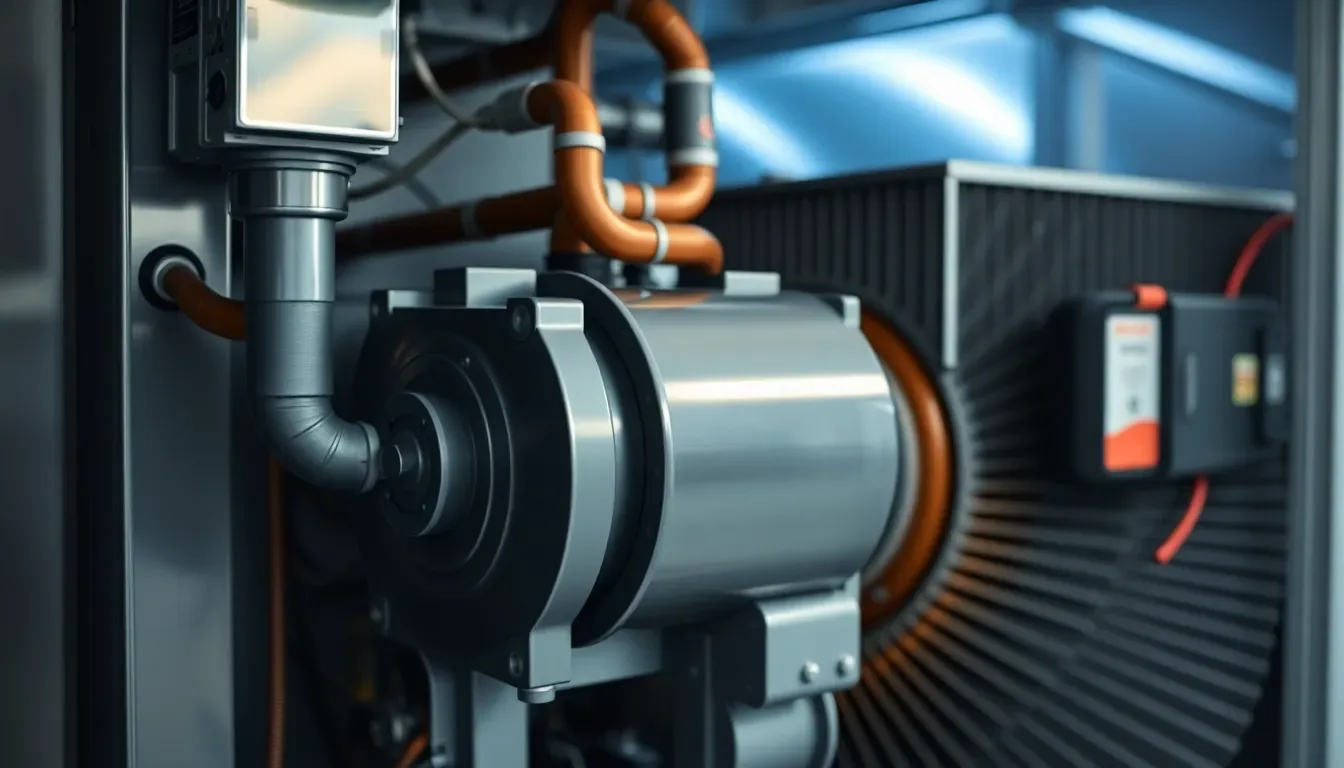
The outdoor unit holds three of the four refrigerant cycle components:
- The evaporator coil (large finned heat exchanger)
- A fan that pulls outside air across the coil
- The compressor (the source of most heat pump noise)
- The expansion valve
The indoor unit (or wall-mounted controller in some installations) holds the condenser and the integration into your home's water loop. The two units are connected by insulated refrigerant lines.
Modern UK air source heat pumps run at around 40–48 dB at 1m — about the volume of a quiet conversation, or your fridge. Sited well, they're rarely a nuisance. Sited badly (next to a bedroom window), they can be annoying.
Ground source vs air source: the physics differ
Air source heat pumps pull heat from outdoor air. Air temperature swings widely across the year — from -5°C in a UK winter to 25°C in summer — and efficiency swings with it.
Ground source heat pumps pull heat from the soil, typically via:
- Horizontal loops — pipes buried 1–2m deep in trenches (large garden needed)
- Boreholes — vertical pipes drilled 60–200m deep (small footprint, higher cost)
Below ~10m, soil temperature stays remarkably constant year-round (around 10°C in the UK). This stability means ground source heat pumps deliver SCOP 3.5–4.5 reliably, where air source is more variable.
The trade-off: ground source costs much more to install (£18,000–£35,000 vs £10,500–£14,500 for air source). The same £7,500 BUS grant applies to both.
What to ask your installer
- What's the modelled SCOP for this property?
- What's the design flow temperature on the coldest day?
- Have you done a room-by-room heat loss calculation? Can I see it?
- Which radiators (if any) need upgrading and why?
- What size cylinder are you proposing, and where will it go?
- What brand and model of heat pump, and what's the warranty?
- Where will the outdoor unit go, and how have you assessed noise impact?
- Have you confirmed MCS certification will be in place at install time?
A competent MCS-certified installer will answer all of these without flinching. If they can't, walk away.
The bottom line
Heat pumps are not magic. They're a well-understood, century-old piece of engineering (the principle was patented in 1855) that's only recently become economical for UK domestic heating. The technology works. The maths is on your side, especially with the £7,500 BUS grant. The make-or-break factors are sizing, radiator compatibility, and installer quality — not the heat pump unit itself.
If you understand the refrigerant cycle, SCOP, and the role of flow temperature, you can ask the right questions and tell good installer quotes from bad ones. That's most of the battle.