Comparison · Reviewed August 2026
Heat Pump vs Gas Boiler: Honest UK Cost & Performance Comparison
Should you replace your gas boiler with a heat pump? Honest install cost, running cost, comfort and 10-year total comparison — with and without the £7,500 BUS grant.
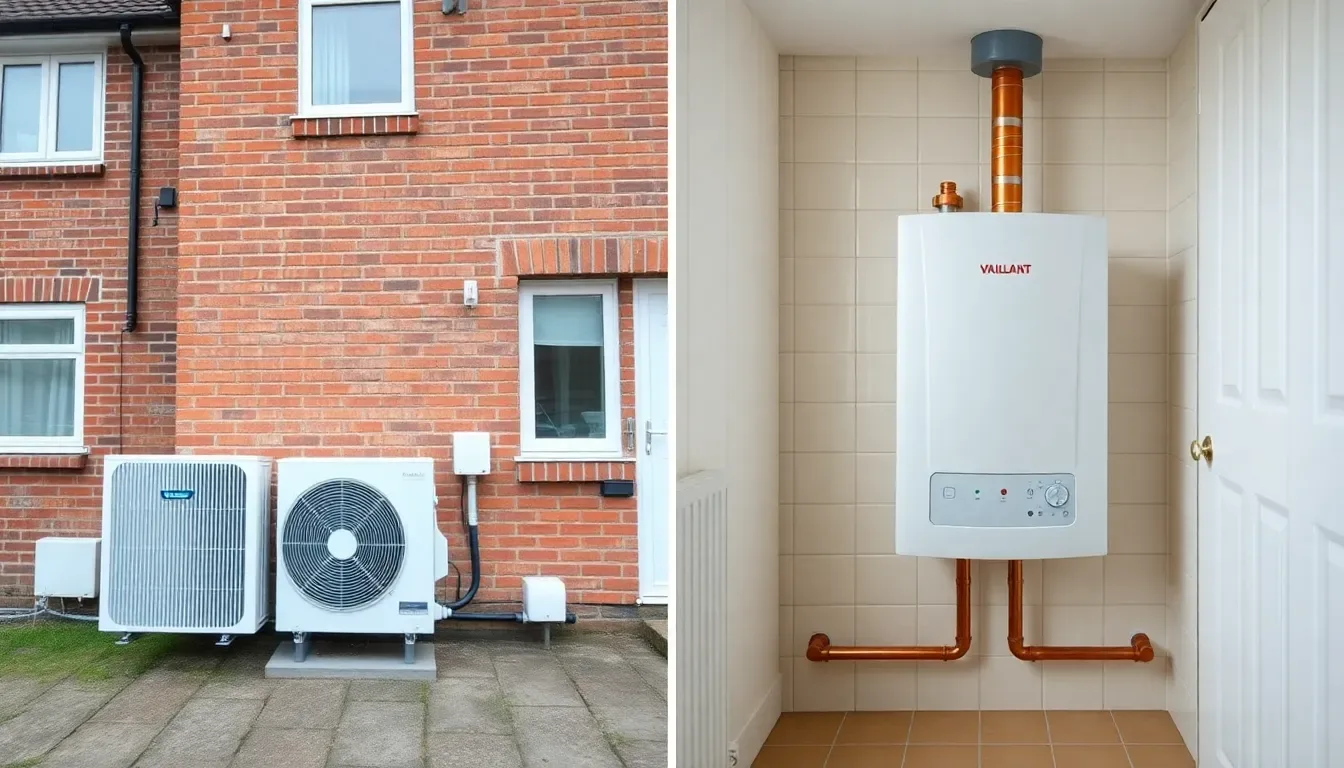
The honest headline: it depends on your insulation, your tariff, and how long you plan to stay. For most UK owner-occupied homes with reasonable insulation and the £7,500 BUS grant applied, a heat pump pays back inside 8–14 years against gas. For poorly insulated rented properties where you'll move in three years, a new gas boiler is still the rational choice. Below, the maths.
Install cost: gas wins on day one
A new combi or system boiler installed costs £2,500–£3,500 — well-established market, simple swap. A heat pump installation costs £10,500–£14,500 for a typical 3-bed semi, or £3,000–£7,000 after the £7,500 BUS grant deduction.
| Cost element | New gas boiler | Heat pump (pre-grant) | Heat pump (after BUS) |
|---|---|---|---|
| Equipment | £1,200–£1,800 | £4,000–£7,000 | £4,000–£7,000 |
| Installation labour | £800–£1,300 | £2,500–£4,000 | £2,500–£4,000 |
| Cylinder / system upgrades | £0–£400 (combi) | £1,500–£2,500 | £1,500–£2,500 |
| Radiator upgrades | £0 | £500–£2,000 | £500–£2,000 |
| Pipework upgrades | £0 | £300–£1,000 | £300–£1,000 |
| BUS grant deduction | — | — | –£7,500 |
| Total | £2,500–£3,500 | £10,500–£14,500 | £3,000–£7,000 |
The day-one cost gap, after grant, is about £500–£3,500. That's modest enough that running costs and payback become the deciding factors — not the upfront difference.
Running cost: heat pump wins on the right tariff
Running cost depends on three things: heat demand (how much heat your home needs), system efficiency, and energy unit prices. Heat pumps need less primary energy (electricity) per unit of heat delivered, but each unit of electricity costs more than each unit of gas.
The maths for a typical 3-bed semi using 12,000 kWh of useful heat per year:
Gas, electricity and oil prices reflect the 1 July – 30 September 2026 Ofgem cap. However, the LPG running-cost figure and the Octopus Cosy tariff rates are not on that same basis and should be treated as less current — see the methodology for details. Treat all running-cost figures here as indicative, not a quote — get a fixed quote from an installer before deciding. See the calculator methodology for the full price basis.
| System | Tariff | Cost per kWh useful heat | Annual cost |
|---|---|---|---|
| Heat pump (SCOP 3.2) | Octopus Cosy off-peak | £0.075 | £900 |
| Heat pump (SCOP 3.2) | Standard variable | £0.082 | £984 |
| New gas boiler (91% eff) | Ofgem cap (gas) | £0.085 | £1,020 |
| 15-year gas boiler (82% eff) | Ofgem cap (gas) | £0.094 | £1,128 |
| Oil boiler | Current oil price | £0.105 | £1,260 |
| LPG boiler | Current LPG price | £0.155 | £1,860 |
A heat pump on the right tariff saves £100–£230 per year vs a new gas boiler, and £600–£900 per year vs oil/LPG. The savings vs gas are modest enough that they rarely justify the upfront cost difference for cost reasons alone — the BUS grant is doing the heavy lifting.
Payback period
Payback = net install cost difference ÷ annual running-cost saving. For an average 3-bed semi replacing a 15-year-old gas boiler:
| Scenario | Net cost difference | Annual saving | Payback |
|---|---|---|---|
| HP (BUS) + Cosy vs new gas boiler | £500–£3,500 | £100–£230 | 5–20 years |
| HP (BUS) + Cosy vs old gas boiler | £500–£3,500 | £200–£400 | 3–15 years |
| HP (BUS) + Cosy vs oil boiler | £500–£3,500 | £300–£500 | 2–10 years |
| HP (no BUS) + standard vs new gas boiler | £8,000–£11,000 | £40–£100 | 80+ years (never) |
The grant is the structural feature that makes the maths work for most homeowners. Without the grant, heat pumps still make sense — for carbon reasons, long-term hedging against gas price spikes, off-grid replacement of oil — but they don't pay back on pure running-cost grounds.
Comfort and lifestyle differences
How heating "feels" is different
Gas boilers run hot, fast, on demand. Heat pumps run continuously at low temperature. The result for a heat pump home:
- Steadier room temperature (less variation through the day)
- Slower warm-up from cold (the system isn't designed for "boost" mode)
- Radiators that feel lukewarm to the touch
- No visible flame, no flue exhaust, no gas smell
Most heat pump owners adapt within a fortnight. Some never quite get used to the lukewarm radiators.
Hot water
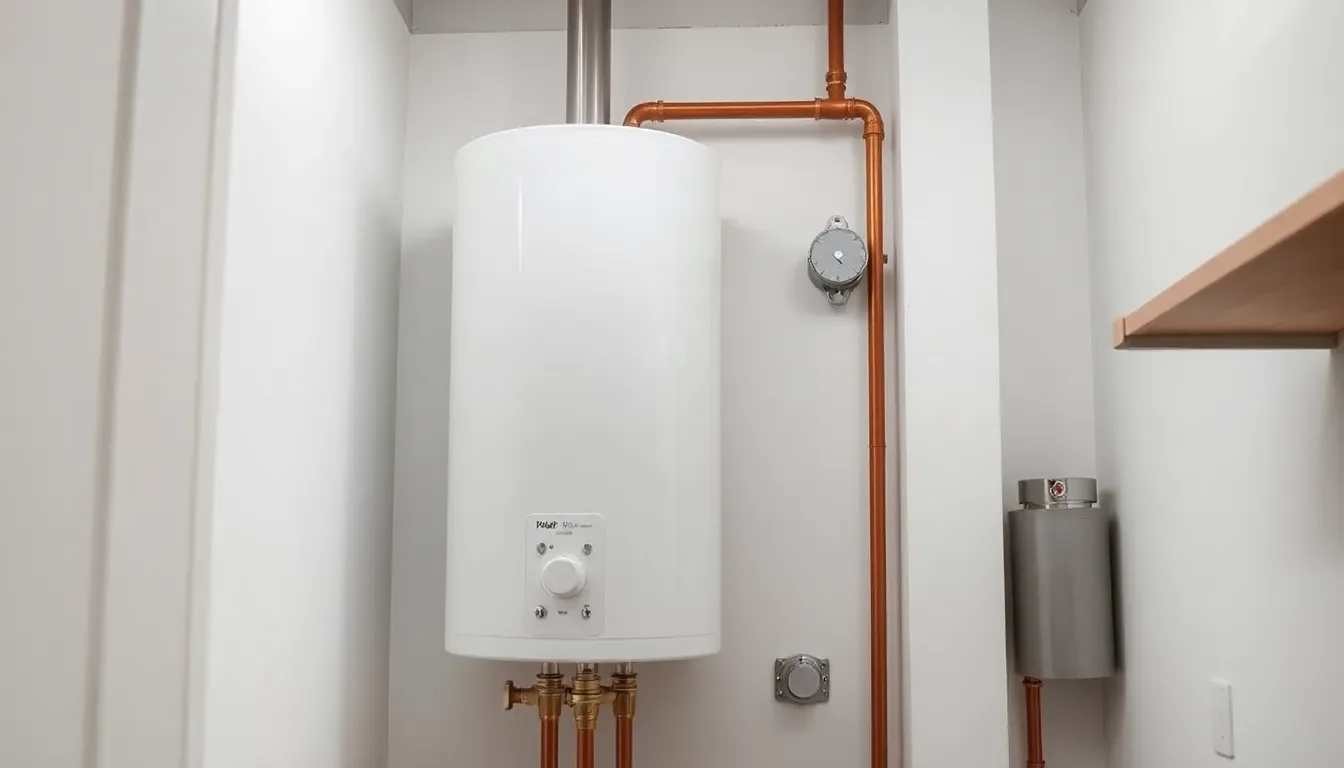
Heat pumps don't do on-demand hot water like a combi. You need a hot water cylinder. This is a real disadvantage for very small flats where space is at a premium. For everyone else, cylinders are fine — modern unvented cylinders are well-insulated, mains-pressure, and take up roughly a 600×600mm footprint.
Cooling
Many air source heat pumps can run in reverse to deliver cooling — a real bonus during the increasingly hot UK summers. Gas boilers cannot.
Carbon and policy
A heat pump produces about 40–60% less carbon per unit of useful heat than a gas boiler, even on today's electricity grid. By 2030, the gap will be wider as the grid continues to decarbonise.
Carbon prices on gas are likely to rise. The UK ETS doesn't yet apply directly to domestic gas, but the policy direction is clear. If carbon pricing affects domestic gas by 2030, gas boiler running costs rise; heat pump running costs (electric-fuelled) do not.

When a gas boiler still wins
It's not a heat pump vs gas boiler question of "which is better". Different circumstances point different ways.
A new gas boiler may still be the right answer if:
- You're renting and can't make the decision yourself
- You're moving in under 5 years
- Your property has poor insulation that you can't improve
- You have limited space for a hot water cylinder
- You've already received a BUS grant on this property (can't be claimed twice)
- Your existing boiler has just died and you need heat back within 48 hours (heat pumps take 8–14 weeks to install)
A heat pump is almost certainly the right answer if:
- You're an owner-occupier with EPC D or above
- You're replacing oil or LPG (payback is short)
- You're planning to stay 8+ years
- You have or are willing to install reasonable insulation
- You want the option of summer cooling
- You're sensitive to future gas price volatility
The decision in five questions
- Are you BUS-eligible? (Run the checker.)
- What's your current fuel? (Oil/LPG users see fastest payback.)
- What tariff will you be on? (Heat-pump tariffs change the maths significantly.)
- How long will you stay? (Payback only matters if you're still there.)
- What's your insulation like? (Poor insulation undermines any heating system.)
The bottom line
For an owner-occupier in a reasonably insulated UK home who plans to stay 8+ years, the £7,500 BUS grant has tipped the heat pump from "early adopter" to "rational financial choice". The upfront cost gap narrows to £500–£3,500. Running costs are modestly lower on the right tariff. Comfort is steadier. Carbon is lower. The decision is closer than the gas industry implies and farther from a no-brainer than the heat pump industry claims.
Run your own numbers through the cost calculator — your answer may not match the average.
If the numbers work for you, the next step is a real quote from an MCS-certified installer — see our directory of heat pump installers in Manchester, or find installers covering your postcode.